
Energies, 2024 – China Power Engineering Consulting Group & Xiamen University
Overview
This 2024 study, published in Energies and led by Bixiong Luo et al., evaluates the economic feasibility of repowering existing coal-fired power plants with high-temperature gas-cooled reactors (HTGRs) — a promising approach within the coal-to-nuclear (C2N) transition.
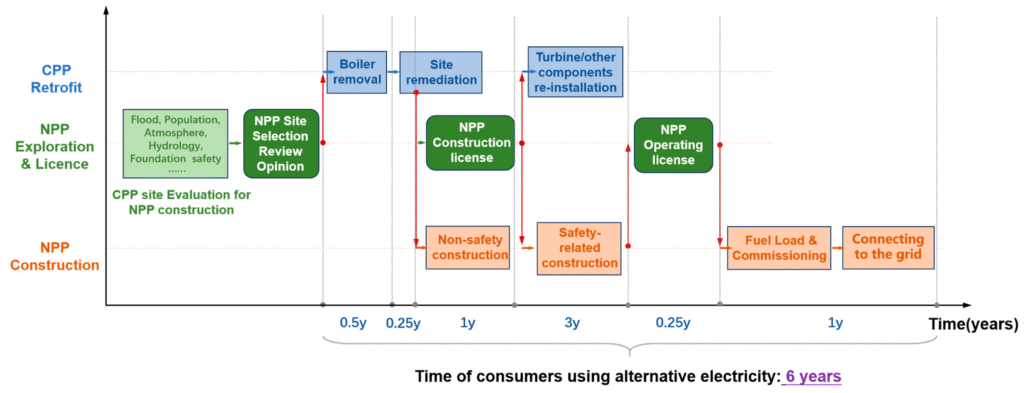
The team used the G4-ECONS cost assessment model (developed by the Generation IV International Forum) to analyze a case study: replacing the boiler of a 600 MW supercritical coal plant with two 272 MWe HTGR units.
Key findings
- Cost reduction:
Retrofitting an existing coal plant with HTGRs reduces total capitalized costs by 11–19% compared with building a new (greenfield) nuclear plant. - Efficiency and costs:
The study estimates C2N levelized unit electricity cost (LUEC) at 0.079–0.081 USD/kWh, compared to 0.083 USD/kWh for a greenfield reactor.
However, C2N projects must still reduce LUEC by ~20% to be competitive with current feed-in tariffs in China. - Construction timeline:
A full C2N retrofit, including safety reassessment and demolition of the old coal systems, is estimated to take six years — comparable to a standard nuclear plant build. - Reused infrastructure:
Reusing the existing coal plant’s grid connection, water systems, and land significantly reduces costs, but coal ash removal and temporary power dispatch during retrofitting can offset up to 5% of the savings. - Implication:
C2N could help avoid asset stranding in China’s young coal fleet (average age <15 years), supporting carbon neutrality goals by reusing existing infrastructure for clean baseload generation.
Repower Perspective
This research represents a major step forward for the coal-to-nuclear transition — moving from concept to quantifiable economics.
While challenges remain in cost and licensing, the findings demonstrate that repowering existing coal infrastructure with modular, advanced reactors is technically feasible and economically promising when supported by targeted policy and innovation.
At Repower, we see studies like this as essential milestones: turning theory into actionable pathways that combine decarbonization with industrial reuse — the essence of repowering.